Most of what makes a house livable happens out of sight. Clean water arrives through buried supply lines, wastewater disappears into pipes and tanks beneath the yard, conditioned air travels through ducts tucked into attics and crawlspaces, and electricity flows through wiring hidden behind every wall. Above it all, layers of decking, underlayment, and flashing keep rain from reaching the framing. These hidden systems rarely draw attention when they work, yet daily routines from morning showers to evening meals depend on them completely.
Because they operate out of view, hidden systems also fail out of view. Sludge accumulates, roots creep into pipes, connections loosen, seals dry out, and insects establish colonies long before any symptom reaches the living space. By the time a backup, leak, outage, or infestation becomes obvious, the damage has often spread. Protecting these systems means looking beneath the surface on a regular schedule, correcting small faults while they are inexpensive, and upgrading aging components before they fail. Homes cared for this way run smoothly, stay healthier, and avoid the disruptive emergencies that interrupt everyday life.
Replacing Corroded Baffles and Sealing Cracked Lids

Buried wastewater tanks depend on baffles at the inlet and outlet to function correctly. The inlet baffle directs incoming flow downward so solids settle, while the outlet baffle keeps floating scum from escaping into the drainfield. Hydrogen sulfide gas produced inside the tank forms sulfuric acid that slowly eats away concrete baffles until they crumble or fall off entirely. Cracked or poorly fitted lids create a different hazard, allowing groundwater and surface runoff to flood the tank and, in the worst cases, creating a dangerous opening for children or pets.
Prompt septic tank repair begins with pumping the tank and inspecting its interior walls, baffles, and lids. Corroded concrete baffles are replaced with PVC sanitary tees, often fitted with an effluent filter on the outlet side to capture fine solids before they reach the field. Cracks in tank walls are sealed with hydraulic cement or epoxy, and damaged lids are replaced with reinforced concrete or polyethylene covers. Risers with secure, child-resistant lids bring access to grade, making future inspections and pumping quick and safe.
Resealing Worn Flashing and Replacing Damaged Shingles
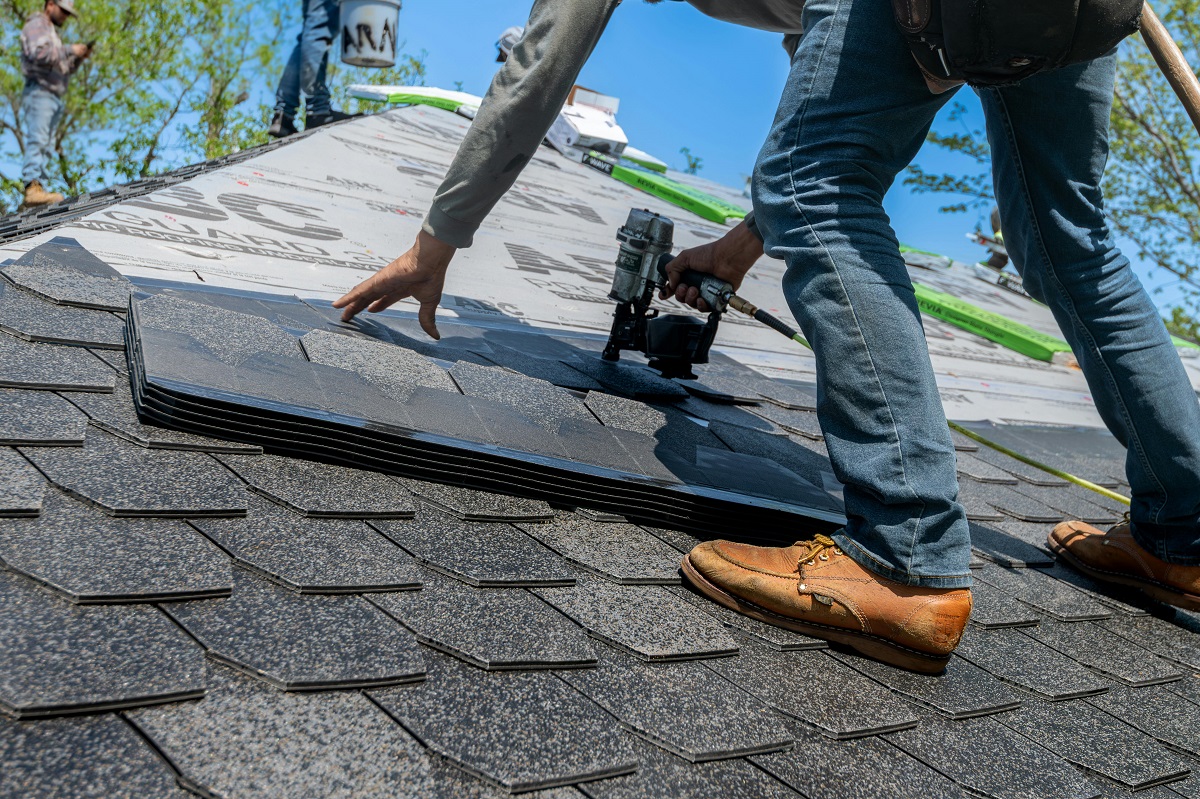
The shingle field is only as watertight as its weakest transition. Flashing at chimneys, sidewalls, skylights, and plumbing vents bridges the gap between the shingles and adjoining surfaces, and over time sealant dries out, metal corrodes, and fasteners loosen. Wind lifts tabs and breaks their adhesive bond, hail fractures the mat beneath the granules, and falling branches puncture the surface. Each opening lets water reach the decking, where it rots sheathing, soaks insulation, and feeds mold in the attic.
Professional roofing services begin with a close inspection of the field, valleys, ridges, and every penetration. Damaged shingles are carefully released and replaced with matching material fastened with ring-shank nails and sealed in high-wind areas. Worn flashing is removed, and new step flashing is woven course by course along sidewalls, while chimney counterflashing is set into reglets cut into mortar joints. Pipe boots are replaced, self-adhered membrane is applied around penetrations, and exposed fasteners are sealed to keep water out.
Sealing Foundation Gaps and Treating Hidden Nesting Sites
Insects and rodents rarely move into a home through the front door. They follow foundation walls, utility lines, and landscape edges until they find a gap around a pipe, a crack in the slab, a torn vent screen, or a worn door sweep. Once inside, they settle into hidden nesting sites in wall voids, attics, crawlspaces, and beneath appliances where food, warmth, and moisture are close at hand. Rodents chew wiring and contaminate insulation, while ants, roaches, and termites spread quietly through the structure.
Effective pest control begins with a full inspection of the foundation, crawlspace, attic, and utility penetrations, tracing droppings, trails, and moisture readings back to their sources. Gaps are sealed with copper mesh, hardware cloth, metal flashing, and durable sealants, and damaged vent screens and door sweeps are replaced. Hidden nests are treated with targeted baits, dusts, and growth regulators placed directly in voids and harborages, while a non-repellent perimeter treatment intercepts new arrivals. Moisture corrections and regular monitoring keep activity from returning.
Reconfiguring Cramped Layouts and Upgrading Ventilation Hoods

Cooking spaces built decades ago often struggle to meet modern needs. Narrow aisles create bottlenecks, corner cabinets swallow cookware, and limited counter space forces appliances to crowd work surfaces. Just as important, many older rooms rely on recirculating microwaves or undersized fans that do little to remove grease, moisture, odors, and combustion byproducts from gas cooktops. Those pollutants linger in the air, coat cabinets and walls, and can contribute to poor indoor air quality throughout the house.
Thoughtful kitchen remodeling begins by mapping how the household cooks and moves through the space, then reorganizing prep, cooking, cleanup, and storage zones with aisles of 42 to 48 inches. Non-bearing walls may be removed, islands added, and storage improved with full-extension drawers and pull-out organizers. Ventilation is upgraded with a ducted range hood sized to the cooktop’s output, vented outdoors through smooth rigid metal duct with a backdraft damper, and paired with makeup air where required by code. Dedicated appliance circuits, task lighting, and durable quartz surfaces round out a room that is safer and easier to use every day.
Designing Backyard Retreats and Engineering Reinforced Shells
A backyard swim area can become the center of family life, but only if it is designed for the site and built to resist the forces acting on it. Poor placement leads to constant leaf debris, cold water, and runoff entering the basin. Below grade, expansive clay, high groundwater, and poorly compacted soil press against the shell, and inadequate reinforcement allows cracks that leak continuously and wash away supporting soil.
An experienced custom pool builder begins with a site survey, soil report, and design that considers sun exposure, drainage, privacy, setbacks, and how the space connects to the house. Engineered plans specify shell thickness and steel reinforcement, and crews tie rebar in a tight grid before applying concrete pneumatically and curing it slowly for full strength. Plumbing is pressure-tested before backfill, hydrostatic relief valves protect against groundwater pressure, and an equipotential bonding grid ensures electrical safety around the water. Barriers, alarms, and self-latching gates complete a backyard retreat that is as safe as it is inviting.
Upgrading Outdated Panels and Protecting Vulnerable Circuits
Electrical service is one of the most important hidden systems in a home, and one of the most dangerous when neglected. Older 60- or 100-amp panels struggle to handle modern loads, and certain legacy panel brands are known for breakers that may fail to trip during overloads or short circuits. Loose connections create heat at terminals, aluminum branch wiring can loosen over time, and many older homes lack the arc-fault and ground-fault protection now required in living spaces, wet areas, and outdoors.
The top electricians begin with a load calculation and thermal imaging scan of the panel to identify overloaded circuits and hot connections. Outdated panels are replaced, often with 200-amp service and a new meter base, and circuits are rebalanced or split to reduce strain. AFCI breakers protect living areas from arcing faults, GFCI protection is added in wet and outdoor locations, and aluminum wiring is pigtailed with approved connectors. A whole-home surge protector shields sensitive electronics and appliances from damaging voltage spikes.
Balancing Duct Airflow and Servicing Seasonal Equipment

Heating and cooling equipment can only deliver comfort if the air it conditions reaches every room. Ducts installed without proper design often send too much air to nearby rooms and too little to distant bedrooms, while disconnected joints and crushed runs leak conditioned air into attics and crawlspaces. Meanwhile, equipment that goes without seasonal service develops dirty coils, clogged filters, weak capacitors, and worn burners, all of which reduce efficiency and increase the risk of breakdowns during peak demand.
A reputable HVAC company begins with airflow measurements at each register and a duct leakage test, then seals joints and seams with mastic or UL-181 foil tape, reconnects loose runs, and adjusts balancing dampers so each room receives its designed airflow. Seasonal service visits include cleaning coils and blower assemblies, replacing filters, testing capacitors and contactors, inspecting heat exchangers and burners, and verifying refrigerant charge and combustion performance before the heaviest heating and cooling months.
Restoring Cooling Capacity and Controlling Indoor Humidity
A cooling system that runs constantly but leaves rooms warm and sticky has usually lost capacity. Refrigerant leaks reduce the system’s ability to absorb heat, dirty coils limit heat transfer, and blower settings that move too much air prevent the coil from pulling moisture out of the air stream. High indoor humidity makes rooms feel warmer than the thermostat suggests, encourages mold growth on cool surfaces, and creates conditions that attract dust mites and insects.
Effective air conditioning service restores capacity by finding and repairing refrigerant leaks, pulling a deep vacuum, and recharging the system by weight before verifying superheat and subcooling. Indoor and outdoor coils are cleaned, and blower speed is adjusted to about 350 CFM per ton in humid climates to improve moisture removal. Where humidity remains high, a whole-home dehumidifier can be integrated with the ductwork, and smart thermostats with humidity control help maintain comfortable conditions while reducing energy use.
Felling Decayed Trunks and Grinding Leftover Stumps
Mature specimens can appear healthy while decay hollows them from within. Fungal pathogens enter through wounds, broken limbs, and damaged roots, breaking down the wood fibers that give the trunk its strength. Warning signs include cavities, fungal conks at the base, oozing cracks, and dead branches in the upper canopy. A decayed trunk standing near the house, driveway, or power lines can fail suddenly during wind or ice storms, while roots seeking moisture can invade buried pipes.
Professional tree removal begins with an arborist’s assessment that may include resistance drilling to measure sound wood inside the trunk. When removal is necessary, climbers rig and lower sections with ropes and friction devices, or a crane lifts heavy pieces over structures in tight spaces. The stump is ground eight to twelve inches below grade along with major surface roots, reducing the chance of regrowth and root intrusion into nearby pipes. Debris is chipped and hauled away, and the area is backfilled with topsoil.
Jetting Grease Buildup and Cutting Invasive Root Masses

Waste lines carry everything that leaves the house, and over time they narrow from the inside. Fats, oils, and grease poured down sinks cool and harden along pipe walls, catching food particles, wipes, and hair until flow slows to a trickle. Roots sense moisture escaping from cracked or loose joints, then grow into the pipe and form dense masses that trap debris. Slow drains, gurgling toilets, foul odors, and backups at the lowest fixtures are common signs of trouble.
Professional sewer line cleaners begin with a camera inspection to locate blockages, root intrusion, and structural defects. Root masses are removed with mechanical cutting heads designed to shear roots flush with the pipe wall, and hydro-jetting sends water at several thousand psi through a rotating nozzle to scour grease and debris from the full circumference of the pipe. A follow-up camera pass confirms the line is clear, and recommendations such as root barriers, pipe lining, or scheduled maintenance help prevent future clogs.
The systems that make everyday living possible may operate out of sight, but they shape every part of the household routine. Sound wastewater infrastructure, clear waste lines, safe electrical service, efficient heating and cooling, and a watertight shell keep the home clean, comfortable, and safe. Pest defenses, healthy landscaping, and well-designed living spaces protect the structure and support the people who depend on it. When any hidden system falters, the consequences can spread quickly into finished spaces.
Protecting these systems requires steady, proactive attention. Regular camera inspections of waste lines, periodic wastewater tank maintenance, seasonal heating and cooling service, electrical evaluations, insect monitoring, and inspections of shingles and flashing catch problems early. Upgrades such as modern electrical panels, ducted ventilation, and properly balanced airflow improve performance and reduce the risk of costly emergencies.
The result is a home that runs reliably day after day. Water flows freely, air stays comfortable and clean, power is safe and dependable, and the structure remains dry and sound. By giving hidden systems the care they deserve, homeowners protect the comfort, health, and value of the place where everyday life unfolds.